

What Animals Made The Burrows For The Owls Hoot
Communication is vital for all birds, and owls are no exception.
But put, the reasons owls hoot are to communicate with other owls.
Hooting is merely another form of avian vocalization, but it is near notably heard in the social clubStrigiformes(owls).
Dissimilar species use different kinds of sounds, and thesyrinx dictates these. Accordingly, the syrinx is the primary avian vocalization organ, and it is equivalent to thelarynx (voicebox) in humans.
In this article, I'll be covering why owls would want to talk to each other, as well as some basics on avian vox. And so, let's swoop right in!
What's The Point Of Hooting?
There are four primary reasons for vocalization in the animal kingdom: claiming territory, attracting mates, intraspecies advice, and warnings. There are obviously more reasons than simply these iv, simply I think they can all fit nether these parent categories.
An owl'due south territory is vital to ensure it has available nourishment, shelter, and infinite to stay healthy. Territory is also essential to alluring and belongings onto a potential mate.
Each species of owl will take a different ideal territory.
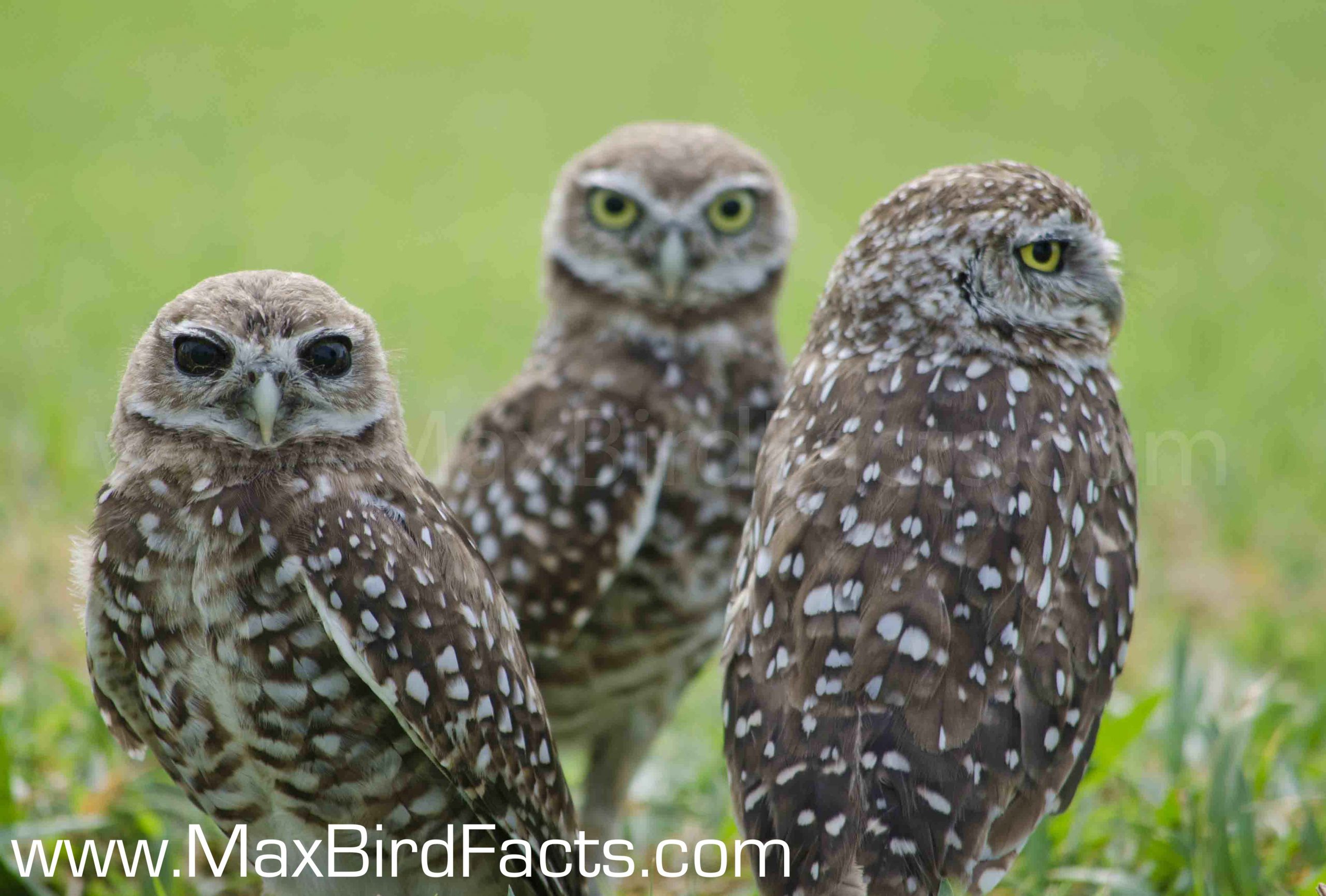
Burrowing Owls (Athene cunicularia) will expect for big, flat areas (prairies, plains, pastures, etc.) with scattered perches. Also called Prairie Dog Owls, Burrowing Owls likewise need pre-dug burrows from prairie dogs, ground squirrels, or gopher tortoises since they rarely dig their own.
They will also be preferably close to groups of large ungulate mammals, using their droppings to attract dung beetles to the couch for an piece of cake meal.
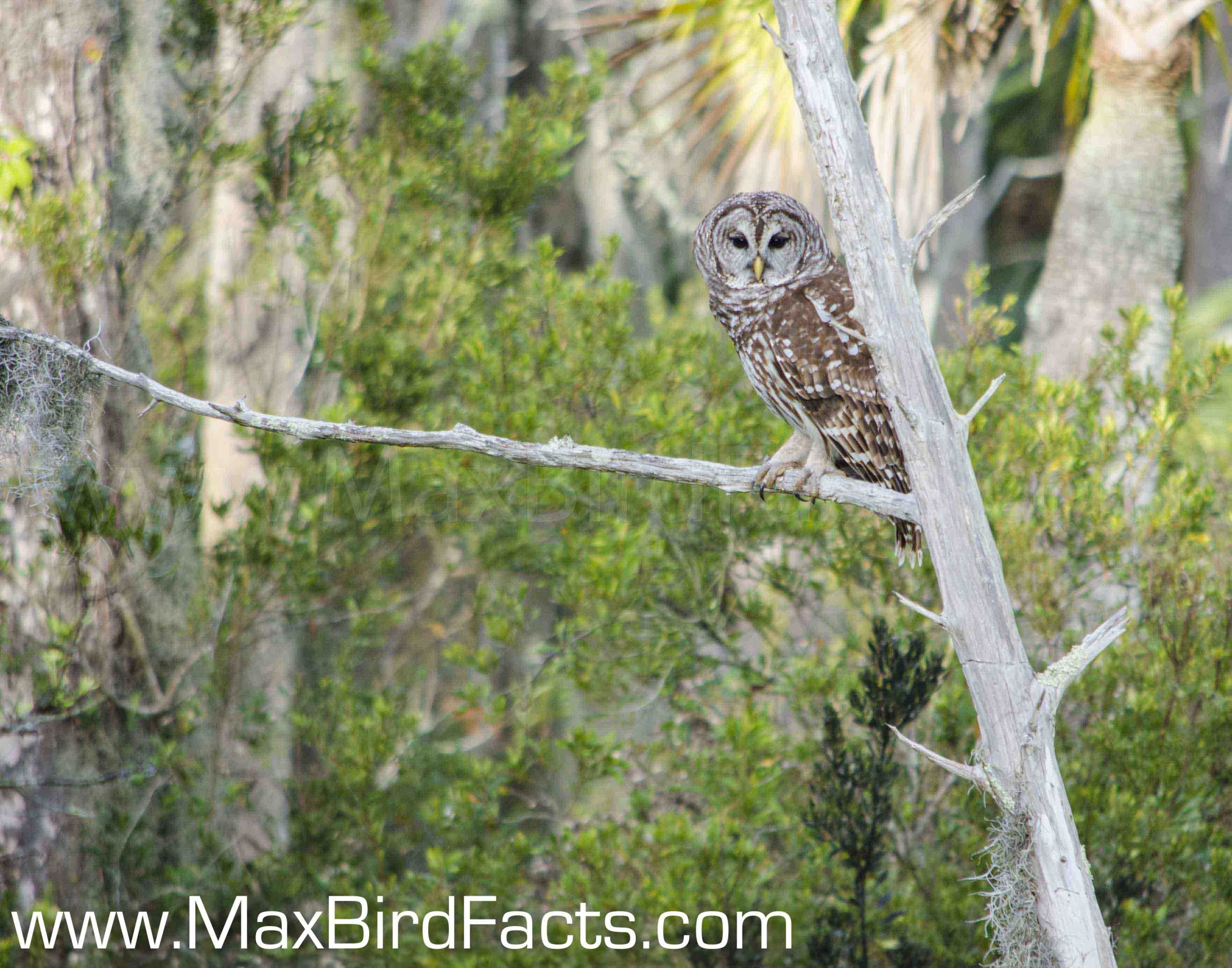
On the other paw, Barred Owls (Strix varia) crave thick forests most marshes, swamps, or other waterlogged lands. Their diet of pocket-sized rodents, amphibians, and reptiles drives their demand for this habitat.
Fortunately, these habitats ordinarily don't friction match the needs of their well-nigh unsafe predator, the Great Horned Owl. Notwithstanding, sometimes one of these will wander into a Barred Owl's dwelling house and force the smaller owl to retreat.
Hoots are surprisingly effective calls for securing a home. Since these are low-frequency songs, this sound will travel farther than more high-pitched calls.
The low-frequency will send the owl's signal through the dumbo forests they live in, letting potential rivals know to stay abroad.
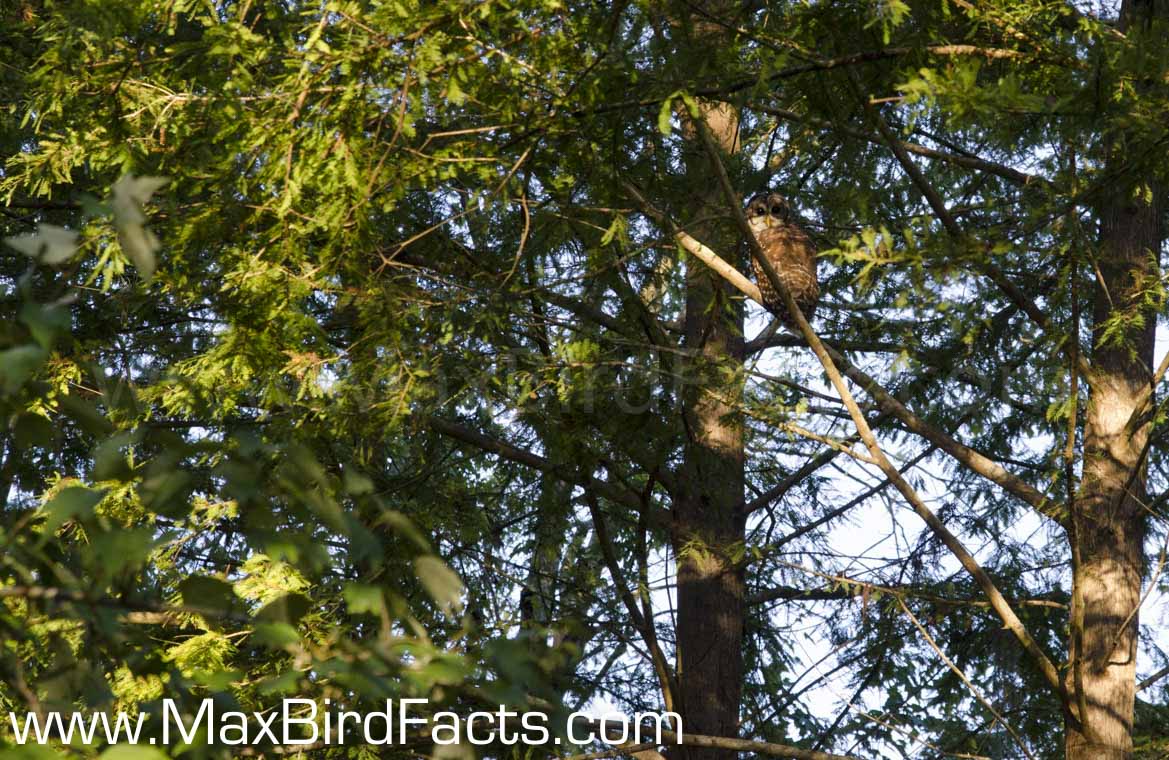
The "Who Cooks For You" call of the Barred Owl is i of the very few means to identify these elusive birds in the dead of dark.

Information technology is nearly impossible to spot these animals unless y'all can see the owl silhouetted in the moonlight or street lights.
This song's depression, raspy audio is ingrained in my memory from listening to the nesting pair in my yard growing up.
The sound of a hoot can too concenter a potential mate. The quality of a male person'south song will determine if a female volition answer.
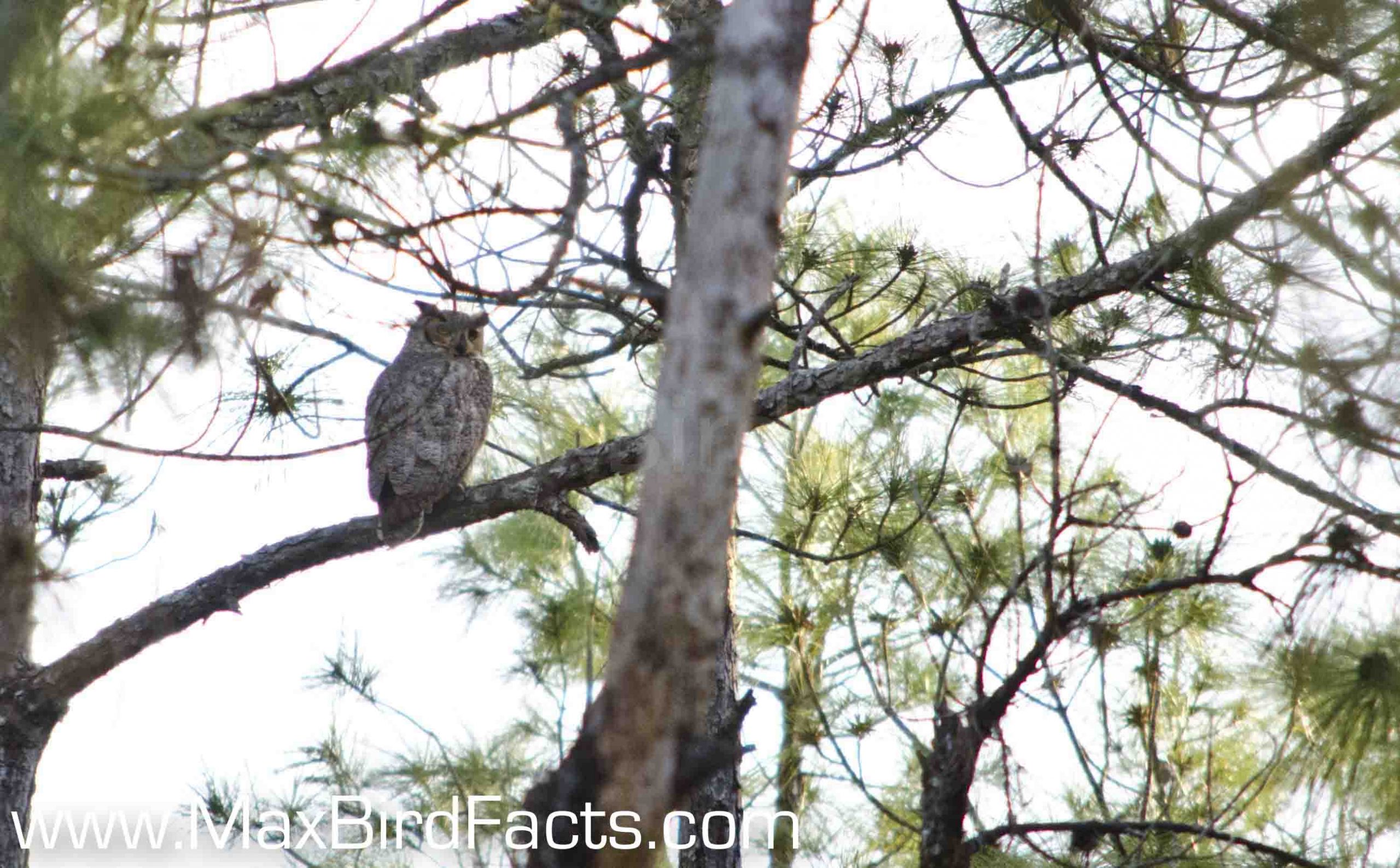
The Great Horned Owl's "hoo-Hoo-hoo-hoo" call is probably the well-nigh well-known owl song globally.
This iconic tune is perfect to set the scene for a night and foreboding wood in a film. Just in reality, this is a romantic song that a mating pair volition oftentimes duet to build their bond.
Duets are typical behavior for many monogamous birds and keeping their connectedness throughout the breeding season and the rest of the year is imperative.
Unlike other birds, female person owls vocalize about equally much as males. Their calls are sometimes more high-pitched, but this isn't reliable for all owl species.
Specifically, with Great Horned Owls (Bubo virginianus), the male'south syrinx is more developed and produces a noticeably deeper tone than the female's.
If y'all've always heard a pair of owls hooting at each other, chances are the first hoot was sent by the male, and the 2d will be the female returning the call.
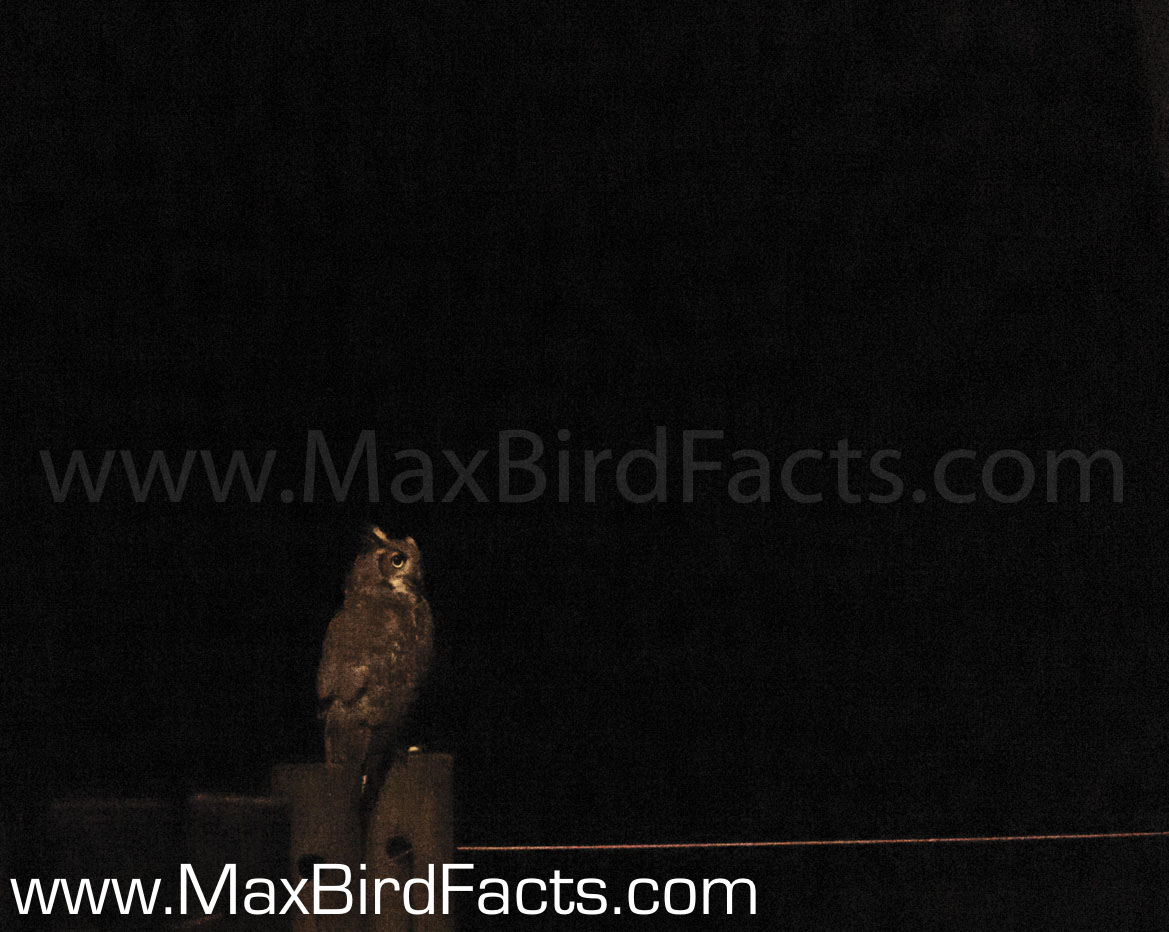
On a side note, it would exist best if you never tried to spotlight an owl. An owl's optics are well adjusted to low light, and you can daze or damage the bird'south eyes by shining a flashlight at them or using a camera flash.
I know it can exist tempting to use a low-cal source to try and capture an paradigm of these fantastic birds, but it does more harm than good. And then instead, get creative and endeavor and make the environment work to your advantage. You never know; y'all might make an epitome you lot would never take idea to otherwise.
Owls don't just hoot. Like any other bird, they can produce a wide range of calls; these include screams, rattles, whistles, barks, shrieks, clucks, hisses, coos, and cries, to name a few.
Owls use hoots along with these other vocalizations to warn and scare off danger. A Barn Owl's shriek is one of the most jarring sounds I've ever heard.
It's such a cut, ear-piercing weep that makes the hair stand on the dorsum of your neck. These calls are highly effective in letting other animals nearby know in that location is a threat and frightening off that predator, and I can come across how.
Female owls utilize shrieks and rattles to scare off nest robbers. The female's cries volition too concenter the male dorsum to the nest to help fight off the menace. And, if the sounds don't ward off the threat, the powerful talons and fly strikes volition.
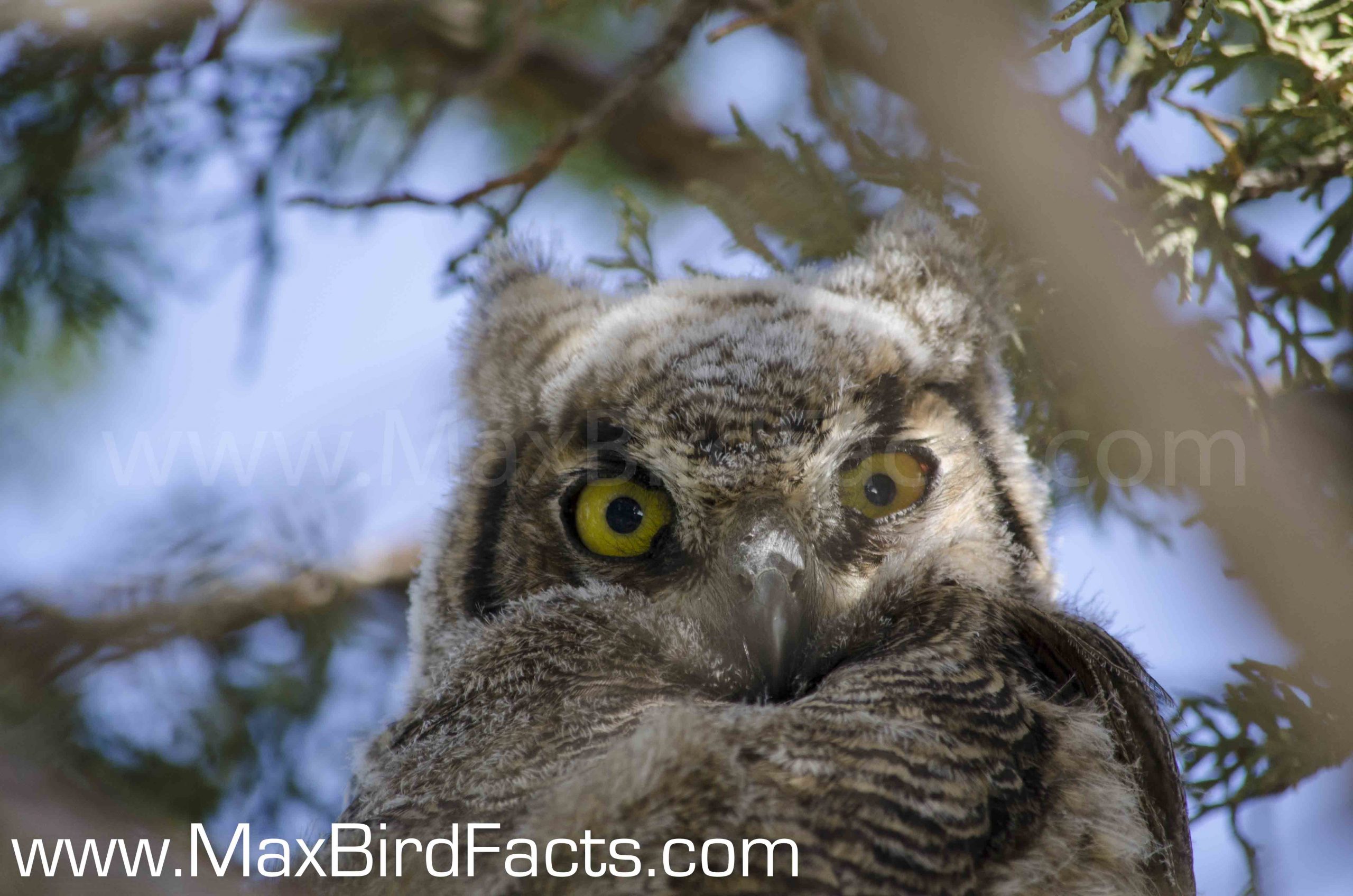
Nestlings will also utilize an assortment of calls to communicate with their siblings and their parents.
Begging is very disquisitional to brand sure the parents feed the chicks enough. Young chicks volition voraciously eat anything their parents requite them, and they need to.
American Barn Owls (Tyto furcata) will fledge by the time they are seven weeks old. On the other hand, Eastern Screech-Owls (Megascops asio) volition leave the nest at only 5 weeks. Thus, it appears that fledging fourth dimension is directly linked to the adult size of the species.
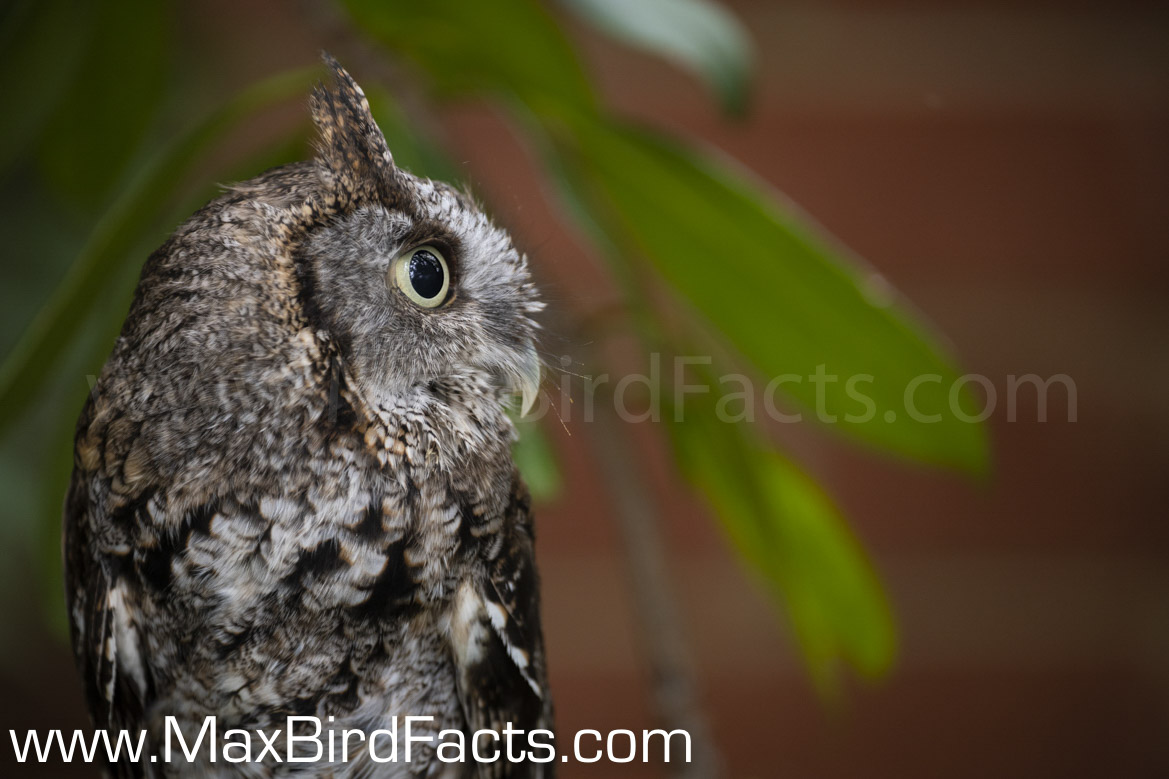
The historic period of the owl will also decide what calls they can produce. Younger birds volition ordinarily make more than high-pitched screams and cries. These are mixed with begging calls and beak snaps, insisting the parents bring them more food.
Young owls won't exhibit the characteristic hooting of their parents until they fledge at eight weeks old.Therefore, the development of the chick's syrinx direct links to its power to hoot.
The Syrinx – Avian Voicebox
Thesyrinx is establish at the signal in thetrachea where it splits into the iibronchi. The syrinx itself is connected tosyringeal muscles that alter thetympaniform membranes to produce different sounds as air passes through them.
And then what does all of that sciencey-sounding stuff mean?
Essentially, the syrinx controls the sound the bird makes through musculus contractions, irresolute the internal shape of that throat section.
The sounds the syrinx produces tin exist separated into 2 chief groups, calls and songs.
Songs are typically much more than complex in their sound equally well equally their employ. For example, birds apply songs for territorial defense force, pair-bonding, and intersexual or intrasexual selection.
Calls are ordinarily much shorter, simpler vocalizations, and are much more versatile. Some types of calls are contact, flying, alarm, mobbing, and begging.
Looking at how owls use hoots, they can fit under both of these categories. As I said before, hoots are used for setting upwardly territory, attracting mates, and alarm virtually danger.
Granted, owls will also use the myriad of other types of sounds they can make for some of their needs. However, hoots are very versatile song owls can utilize for various tasks.
The development of the syrinx, and its complexity, vary from ane group of birds to another.
The syrinx is restricted to the bronchi westwardith owls, giving them a middling range of vocal abilities.
Compare this to the syrinx ofPasseriformes (songbirds); their vocal organ covers both the lower stop of the trachea and the upper portions of the bronchi. This extension of the syrinx in songbirds allows them to take massive ranges of notes they tin hit for a song.
I don't want to go as well into the syrinx here because information technology deserves its own article entirely. Still, I think this was a satisfying, brusque synopsis for the necessary information about this organ.
Why Practise Owls Hoot? To Talk With Each Other!
Then, now we know the reasons why owls hoot.
It is equally uncomplicated as communication between a mating pair or as complex as informing other animals of a local threat.
All the unlike forms of communication come up to the end goal of relaying information from one owl to another. Whether telling some other male to stay off his turf, trying to entice a mate, talk to their young, or warn their partner about a ophidian invading the nest, hoots tin accomplish all of this.
The syrinx is the vocal organ plant in birds, and its shape and use have a wide array across the Orders of Aves.
Owls have opted for low-frequency hoots that can travel long distances through dumbo forests. This, of course, isn't fair to say for all members of theStrigiformes, but it is valid for the vast majority.
The development of the syrinx in immature owls is essential for their ability to hoot as an adult.
If an owl couldn't hoot, would information technology be an owl at all?
Thank you for reading this commodity, and I really hope you learned something new!
If yous want to read more than on why birds sing, bank check out my articleWhy Exercise Birds Sing in the Morn – Nature's Alarm Clocks.
If yous have any suggestions for futurity articles or topics yous would similar me to cover, please leave a comment or shoot me an e-mail.
Make today slap-up!
Max
Source: https://maxbirdfacts.com/why-do-owls-hoot-4-reasons-to-sing/
Posted by: georgeimettences.blogspot.com
0 Response to "What Animals Made The Burrows For The Owls Hoot"
Post a Comment